

Study in Canada
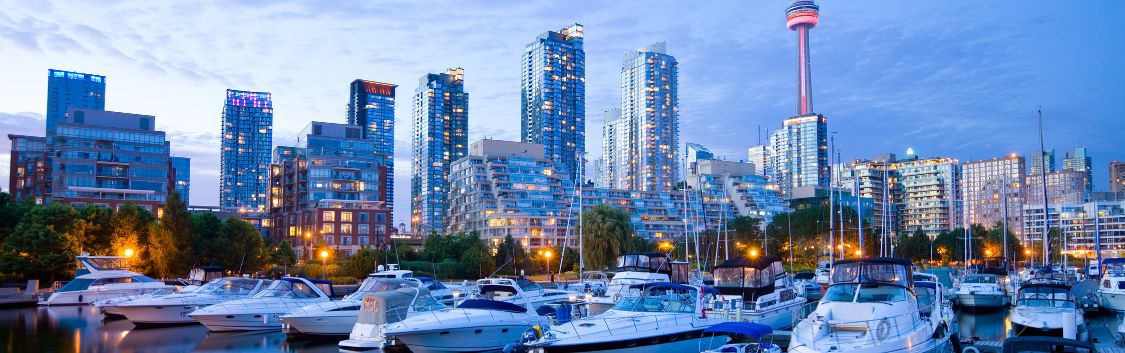
Canada is in North America. Its major cities include Toronto, Montréal and Vancouver, and it offers outdoor activities, city life and a diverse culture.
Canada is a study-abroad option for many Indian students. After graduating, some students can apply for a Post-Graduation Work Permit (PGWP). Eligibility depends on your programme and other conditions. Source: IRCC, accessed 18 Oct 2026.
Canada standards for student visa
To study in Canada you need a study permit. You may also need a visa or other travel document to enter the country. Check the current requirements on canada.ca before applying.
For the study permit you need a letter of acceptance from a designated learning institution (DLI), proof of funds and, in most cases, a provincial or territorial attestation letter (PAL/TAL). Source: IRCC, accessed 18 Oct 2026.
Not sure if your marks are enough? See our guide to the percentage required to study abroad.
Cost of studying in Canada
| Sr.No | Study program | Annual tuition fee |
| 1 | Undergraduate degree | Varies by university and programme |
| 2 | Postgraduate degree | Varies by university and programme |
| 3 | Doctoral Degree | Varies by university and programme |
| 4 | MBA | Varies by university and programme |
Fees are set by each university. Check the international fees page for your course.
To plan your budget, read our guide to Canada scholarships and education loans.

Why study in Canada?
Canadian universities and colleges offer degrees in a wide range of fields, such as design, IT and healthcare. Some programmes include co-operative (co-op) work terms, which give you practical experience while you study. You can also work off campus for up to 24 hours a week during regular terms, and full-time during scheduled breaks. Source: IRCC, accessed 18 Oct 2026. Tuition fees vary by university and programme.
Universities in Canada
Universities in Canada include:
- McGill University
- University of Toronto
- University of Alberta
- University of Montreal
- University of British Columbia
Courses in Canada
Fields of study in Canada include:
- Business
- Engineering
- Animation and gaming
- Hospitality
- Computer science
- Physiotherapy
- Health Sciences
- Information technology
See our guide to undergraduate courses in Canada.
-
Universities and Colleges
-
Co-operative Work System
-
Wide Range of Programmes

Frequently Asked Questions
A PAL, or territorial attestation letter (TAL), is a letter from the province or territory where you will study confirming there is a place for you. Your college or university provides it, and it is usually required to apply for a study permit. Submit it with your application, not after. Source: Canada.ca, checked 18 Oct 2026.
No, if you are applying for a degree-granting master's or doctoral programme at a public designated learning institution, starting 1 January 2026. You must still show proof that you meet this exemption with your study permit application. Other students usually need one unless another exemption applies; in Quebec, you need a CAQ instead. Source: Canada.ca, checked 18 Oct 2026.
Ask your college or university how to apply. In most cases you must accept your offer and pay some or all of your tuition first. A PAL issued in 2026 is valid until 31 December 2026 unless it shows an earlier date, and must be valid when you apply. Source: Canada.ca, checked 18 Oct 2026.
If you apply on or after 1 September 2026, you need CAD 23,448 a year for living costs as a single student outside Quebec (about ₹15,72,500, approx., ECB rate of 16 Oct 2026). This is on top of your first-year tuition and travel costs. Quebec sets its own amounts. Source: Canada.ca, checked 18 Oct 2026.
The study permit fee is CAD 150 per person (about ₹10,100), and biometrics cost CAD 85 per person (about ₹5,700), both approx., ECB rate of 16 Oct 2026. A family applying together pays a maximum of CAD 170 for biometrics. Source: IRCC fee list, checked 18 Oct 2026.
If you are eligible, you can work off campus for up to 24 hours a week during regular terms, and unlimited hours during scheduled breaks such as summer and winter holidays. You cannot start work before your study programme begins. Your permit must show off-campus work conditions. Source: Canada.ca, checked 18 Oct 2026.
Master's graduates can apply for a 3-year PGWP, even after a programme shorter than 2 years, if it lasted at least 8 months. For other programmes of 2 years or more, IRCC may give a 3-year permit. Degree graduates need CLB 7 in English or NCLC 7 in French in all four skills. Source: Canada.ca, checked 18 Oct 2026.